Safety & Materials
Fiberglass-Core vs Pure Silicone Mats: What Importers Must Know Before Sourcing
Fiberglass-core and pure silicone mats look identical. The core decides whether a mat can be cut — here is the sourcing checklist that protects importers.
The Short Version
The core decides everything: a fiberglass-embedded mat should never be cut, because a cut edge exposes glass fibers, while a pure silicone mat can be trimmed to fit with household scissors — so get the core material stated in writing and verified by a third-party report before you place the order.
Below: how the two constructions differ, why the cut is the moment the difference becomes a safety issue, the failure modes that turn into complaints and returns, and the checklist — written core declaration, third-party reports, declared end use — that protects importers. It also covers the popular pinch-and-twist test, and why whitening alone proves nothing. PuraDry's own documentation standard is stated at the end: 100% food-grade silicone, with material specification and FDA 21 CFR 177.2600 report available.
One Silhouette, Two Very Different Cores
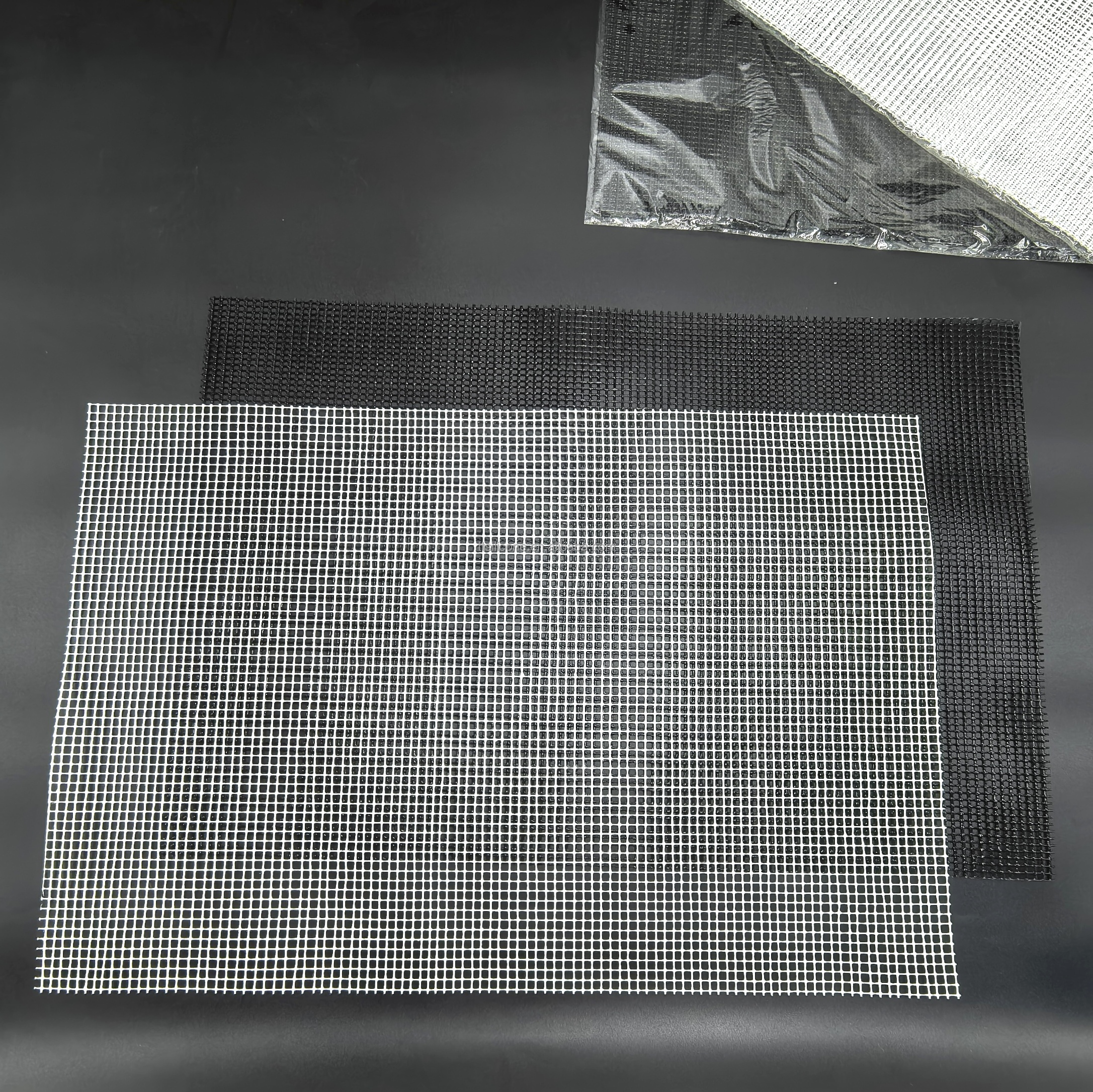
The market sells two constructions under look-alike names. Fiberglass-embedded mats — the classic non-stick baking mat — use a fiberglass mesh as the base, coated with silicone. Pure silicone mats are 100% silicone through the full thickness. Laid side by side, both are flat, flexible, non-stick, and easy to rinse; a product photo cannot tell them apart, and sourcing platforms list both under the same keywords.
The difference stays invisible until someone reaches for the scissors. A pure silicone mat cuts cleanly and keeps its food-contact surface intact. A fiberglass-embedded mat, once cut, exposes glass fibers at the edge — and that is the moment importer risk begins.
The Cut That Turns a Mat Into a Complaint
The rule that circulates through overseas buyer communities and blogs is blunt: never cut a mat with a fiberglass core — the cut edge exposes the glass fibers inside. The topic is discussed often enough in those communities that it now shapes buyer expectations: a customer who unwraps a mat, trims it to fit the tray, and finds frayed fibers at the edge does not write a polite review.
Pure silicone mats carry no such restriction. They can be trimmed to fit with ordinary household scissors, which is how many kitchens and production lines adapt a standard sheet to a non-standard tray. For buyers supplying commercial drying lines, trim-to-fit is often the whole point: standard sheets meet non-standard trays, and the cutting happens on the customer's floor. End users cut mats whether or not instructions permit it, so the importer's job is to source a mat that survives the scissors.
The sourcing risks stack up quietly: a mixed pallet where fiberglass-embedded and pure silicone mats ship under one SKU, a specification sheet that says silicone without naming the core, and an end user who trims a fiberglass-core mat anyway. Each path ends the same way — complaints, returns, and in the worst case a safety dispute attached to your brand rather than to the factory's.
The Importer's Self-Protection Checklist
If you sell under your own label, the exposure is doubled: the mat arrives in your packaging, under your brand name, and the safety question lands on your support queue and your product file — not on the factory's. That asymmetry is why the core material deserves a line item in your sourcing documents rather than a passing question in a chat window. Three entries cover it.
First, get the core in writing. Ask the supplier to state the core material explicitly — fiberglass content in writing, not implied by a photo — so the answer sits in your purchase file instead of in a phone call you cannot reproduce. A supplier who will not put it in writing has answered the question anyway.
Second, match paperwork to product: read the material specification sheet line by line and ask for third-party reports rather than self-declarations. Third, declare your end use upstream — say plainly whether the mats must be trim-to-fit, so the factory matches construction to application instead of shipping whatever is nearest the shelf. When goods arrive, check the batch against the written specification, not against the listing.
One caution on do-it-yourself checks: the pinch-and-twist test popular online is suggestive at best. Whitening under a twist does not prove filler, because pure silicone can also whiten under stress. Treat the test as a conversation starter, not a verdict — the hard indicator is a third-party report read together with the written core declaration.
Which Construction Fits Which Program
Pure silicone is the straightforward specification whenever cut-to-fit is on the table: lines with mixed tray sizes, private-label programs that want trim-to-fit printed on the packaging, and any drying operation where the sheet faces food directly across its whole life. The material itself is the product — no coating, no core, nothing to expose.
Fiberglass-embedded mats exist as a category for flat, fixed-size non-stick use, and buyers who source them do so with the cutting rule in mind. The deciding question for your program is practical: will anyone, anywhere in the product's life, take scissors to it? If the answer is even possibly yes, specify pure silicone — and put that reasoning in the purchase file.
Frequently Asked Questions
How can I tell if a mat has a fiberglass core?
Not by looking, and not reliably by feel. The pinch-and-twist whitening test that circulates online can mislead, since pure silicone whitens under stress too. The dependable route is documentary: a material specification that names the core, backed by a third-party report. Ask for both before ordering — hesitation counts as part of the answer — and keep the documents in the import file with the batch they refer to.
Can pure silicone mats be cut to fit a tray?
Yes — pure silicone mats trim cleanly with household scissors, which makes them the practical choice when trays are non-standard and stock sizes are not. The boundary matters just as much: never cut a mat with a fiberglass core — ask the supplier to state the core material in writing. That sentence belongs in your specification and in the packaging copy you hand your own customers.
How does PuraDry document its sheets?
PuraDry sheets are specified as 100% food-grade silicone, and the material specification plus an FDA 21 CFR 177.2600 report are available to buyers. MOQ starts at 20 sheets and samples are free, so the documents can be reviewed alongside the physical sample before any volume commitment.
What This Means for Buyers
For importers, the fiberglass question is not academic: it decides whether your product can be trimmed safely, whether an end user's scissors create a hazard, and whether your paperwork survives a retailer or customs review. Make the checklist standard — core material in writing, third-party reports on file, end use declared upstream. To review the material specification and FDA 21 CFR 177.2600 report for pure silicone drying sheets, get in touch through the contact page; with free samples and an MOQ of 20 sheets, the verification step is a small one.