Care & How-To
How to Clean and Care for Silicone Dehydrator Sheets
Warm water and mild detergent, no tumble dry, and a 2,000-3,000-use lifespan reported by industry suppliers — the care routine for silicone dehydrator sheets.
The Short Version
Silicone dehydrator sheets need almost no ceremony: warm water, mild detergent, air-dry, done — and with proper care, industry supplier reports give them a working life of 2,000-3,000 uses.
This guide walks through the daily wash, which stains and smells are actually normal, how perforated and mesh styles differ, and how commercial buyers should plan storage, replacement cycles and batch consistency across a fleet of sheets. The one-line summary: tomato and hard-water marks are cosmetic, baking soda or white vinegar lifts lingering odors, and tumble drying is the single step to avoid. The factory facts behind it: PuraDry sheets are 0.7 mm thick, ship with an FDA 21 CFR 177.2600 report available on request, and start at an MOQ of 20 sheets with free samples.
The Everyday Routine: Wash, Rinse, Air-Dry
For daily cleaning, hand washing in warm water with a mild detergent is all it takes — the smooth silicone releases most residues without soaking or scrubbing. Wash the sheets soon after the trays are emptied, because residue that dries on only makes the job longer. The sheets are also dishwasher safe, which is the standard statement on retail listings, so a full set of liners can go into the machine with the rest of the wash-up. Either way, rinse well and shake off the water; the sheet is ready for the next batch with no further treatment.
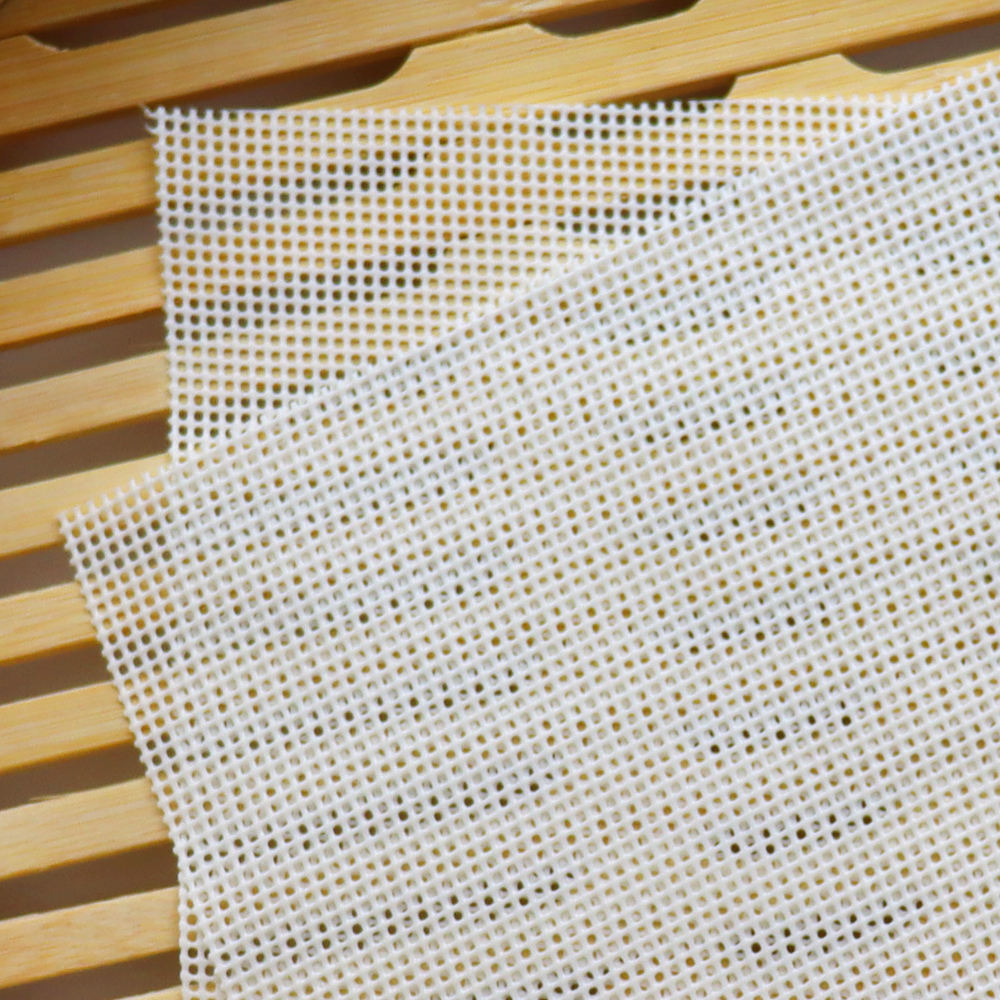
Perforated and mesh styles follow one extra rule. Retail listings commonly note liners can share a machine wash with towels; in commercial kitchens, follow your own segregation rules for food-contact items. The rule with no exceptions: never tumble dry — lay them flat or hang them to air-dry instead. Lay them flat or hang them to air-dry instead. Air-drying is all the finishing they need, and skipping the dryer protects the sheet for its next run.
Stains and Odors: What Is Normal, What Fixes It
Some discoloration is not a defect. Tomato-based products tint white silicone a pale orange, and hard water leaves faint marks after repeated drying cycles. Community and manufacturer consensus is that both are cosmetic: they do not affect use, performance or food safety. If a sheet is still flexible, flat and odor-free, it is still doing its job — the stain is a record of batches, not a warning. Chasing spotless sheets with harsh treatment only shortens their life for no safety gain.
Odors follow the same logic. A faint smell when a new sheet comes out of the box is normal and disappears after the first wash. For smells that genuinely linger — onion, garlic, smoke from a savory batch — community and manufacturer guidance converges on the same two kitchen staples: a baking-soda or white-vinegar soak lifts lingering odors. Wash and rinse as usual afterward, and the sheet comes back neutral for the next batch.
Storage, Lifespan, and the Commercial Replacement Cycle
Storage is the easiest part of the routine. Sheets roll or stack flat, so a full set fits a labeled tube or bin between runs; dry fully before storage so nothing sits damp. for long storage, so nothing sits damp between runs. No special equipment, no climate control — clean, dry and out of the way is the whole standard.
Lifespan is where the care routine pays out. Industry supplier reports put properly maintained sheets at 2,000-3,000 uses, and thickness is the physical basis behind that figure — PuraDry sheets are 0.7 mm, which resists tearing through repeated wash and dry cycles. Spread across a few batches a week, that horizon runs for years, which is why reusable sheets belong in the equipment budget rather than the consumables line.
Commercial buyers should manage the fleet, not just the individual sheet. Track batches per sheet so replacements are planned instead of discovered mid-run; keep sheets from the same purchase batch together so thickness and release behavior stay consistent across a production run; and count cleaning labor when comparing liner materials, because minutes per tray per wash are a real cost at commercial volume. For buyer audits, PuraDry provides an FDA 21 CFR 177.2600 report on request — and with an MOQ of 20 sheets and free samples, a replacement trial stays small enough to schedule between runs.
Frequently Asked Questions
Can silicone dehydrator sheets go in the dishwasher?
Yes. For everyday cleaning, wash in warm water with mild detergent or load the top rack of your dishwasher. Perforated and mesh sheets can share a machine wash with towels — retail listings commonly note it, and commercial kitchens should apply their own segregation rules, making a full tray of liners a one-load job — just skip the tumble dry and let them air-dry before the next batch.
Why did my white sheets turn orange?
Tomato-based products are the usual cause, and the tint is cosmetic: community and manufacturer consensus is that staining and hard-water marks do not affect performance or food safety. Keep using the sheet, wash it as normal, and confirm it is still flexible, flat and odor-free — those three checks say more than the color does.
How long does a sheet last in commercial use?
Industry supplier reports 2,000-3,000 uses per sheet with proper care, and the 0.7 mm thickness is the durable base behind that figure. Plan replacements by tracking batches per sheet rather than waiting for a tear, and confirm material compliance with the FDA 21 CFR 177.2600 report that PuraDry supplies on request before a new batch enters rotation.
What This Means for Buyers
Care is not a chore here — it is a two-step routine, mild wash and air-dry, that protects a 2,000-3,000-use asset. Build the same three habits into the line: a written washing procedure, a batch log that times replacements before failures do, and compliance documents on file for audits. To set that up, request free 0.7 mm samples and the FDA 21 CFR 177.2600 report through the contact page, and start a trial at the MOQ of 20 sheets.