Buying Guides
Steam Mat Hole Sizes Explained: 0.5 mm, 1×1 mm and 4×4 mm for Dim Sum
0.5 mm, 1 × 1 mm or 4 × 4 mm? How hole size shapes steam flow, condensation and release for dim sum, plus sizing, sampling and the FDA food-contact check.
The Short Version
Hole size decides how much steam reaches the base of the food and how fast condensation leaves the basket. Use 0.5 mm for small, delicate or loose pieces, 1 × 1 mm as the standard for most dim sum, and 4 × 4 mm for heavy volume or very wet items.
This guide compares the three patterns PuraDry manufactures, explains what each does inside a working steamer, and covers how to match a mat to your baskets before ordering. Every mat in the range is perforated, in 0.7 mm food-grade silicone.
Three Patterns, Three Jobs
Picture the failure modes before the specification table. It is the middle of a busy morning service and the kitchen has ordered a silicone steam mat with holes matched to somebody else's menu. Small shumai on a 4 × 4 mm grid lose support, deform into the openings and can end up sitting in water; delicate skins on a 0.5 mm pattern steam gently at the edges while the middle of the load stalls. Neither mat is defective, and the mismatch only shows up at service, when it is expensive to fix.
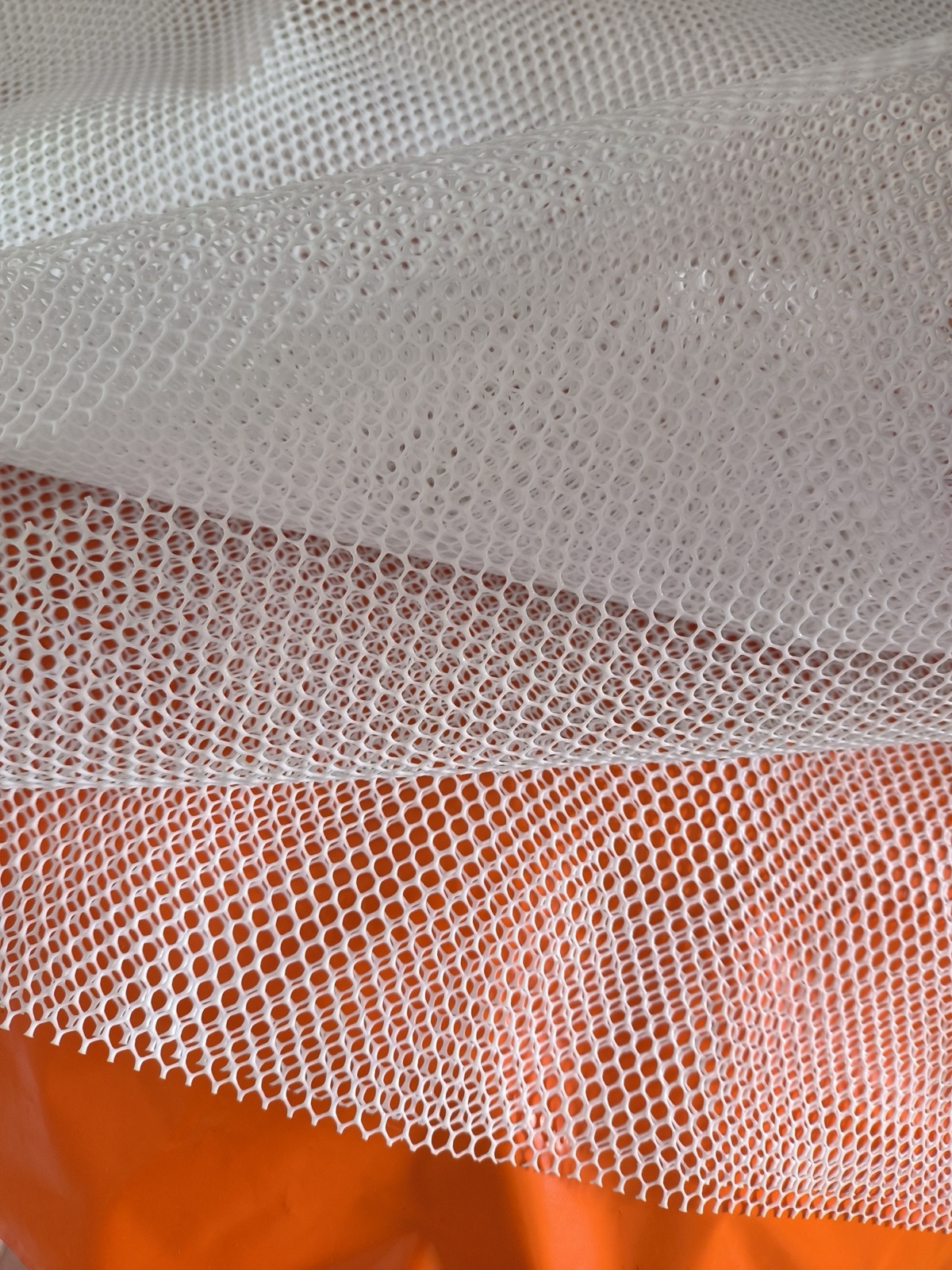
The awkward part is that hole size is almost invisible in a photograph. A white perforated sheet does not show how steam arrives under a dumpling or how quickly a puddle forms between two rows of siu mai. So the useful question is what each pattern does to the product you sell.
What Each Pattern Does in the Steamer
The 0.5 mm extra-fine pattern carries the densest hole field and the finest steam channels. It suits small pieces, delicate skins and loose ingredients that would sag or work down through a wider opening. Steam arrives at the base in a fine, even distribution, so the base sets evenly across the whole piece, and less starch is drawn into the contact points, so release stays clean.
The 1 × 1 mm standard pattern is the all-rounder, and for most dim sum menus it is the pattern to order first. Baozi, dumplings, siu mai, har gow and most steamed buns sit comfortably, steam moves freely underneath, and condensation drains. When one mat must cover a mixed menu, it gives up the least at either end.
The 4 × 4 mm large-hole pattern maximizes open area, which matters when steam flow limits throughput. Use it for stacked baskets, tall pieces that need heat driven through, and wet or heavy items such as lotus-leaf rice that release a lot of water. With more open area, the basket recovers faster after the lid is opened. Keep the pattern for pieces too large to slip through.
How Hole Size Shows Up in the Finished Product
Start with the steam path. Steam rises, meets the mat, and passes through the openings. Where it passes through, it heats the underside of the food, so the base sets earlier and more evenly. A dense pattern spreads that contact across many small openings; a more open pattern moves more steam but supports less of the product. That trade-off is the whole decision.
Condensation is the second effect. Water that collects under the food leaves a pale, sticky ring where the piece touches down. Openings give that water a route away, and larger openings drain faster, which is why wet items tolerate 4 × 4 mm while fragile skins prefer the fine grid. Release and cleaning follow the same geometry: less starch trapped at the contact points, and a brush through the holes brings the surface back.
Then there is sticking risk, the third effect. Broadly, the finer the pattern, the more contact points support the dough and the more moisture stays near the base; the more open the pattern, the faster the base dries and the easier small pieces shift or fall through. The right pattern is the one whose support and drainage match the product, not the one with the most holes.
Sizing, Sampling and the Order Decision
Sizing comes before hole choice. Standard mats run 60 × 80, 70 × 90 and 80 × 90 cm, which covers most commercial steamer baskets. Sheets can be cut to fit round or irregular baskets, and custom widths run to 2 m with rolls to 100 m. All three patterns are 0.7 mm and food-grade.
Then trial before you commit. Order free samples in two patterns rather than one, and pick products from both ends of your menu: the smallest delicate item and the wettest heavy one. Judge the sample on three things: whether the base releases without tearing, whether water sits under the food at the end of the cycle, and how long it takes to clean. Ask for the FDA 21 CFR 177.2600 report in the same trial so the paperwork is settled before volume.
The factory behind these notes is PuraDry, a silicone manufacturer in Shenzhen. The material is 100 percent food-grade silicone and BPA-free, rated from -40 to 356 °F (-40 to 180 °C), and the range is perforated throughout. The MOQ is 20 pieces, 1,000 pieces run in 3 to 5 days, and samples and the FDA 21 CFR 177.2600 report are available on request.
Frequently Asked Questions
Which hole size should a mixed dim sum kitchen order first?
For most menus, the 1 × 1 mm standard. The working rule is that you start with the 1 × 1 mm pattern and move up or down only when a specific product needs it. Step down to 0.5 mm when the menu includes small or delicate pieces, and up to 4 × 4 mm when volume or very wet items dominate.
Do bigger holes steam food faster?
More open area moves more steam and drains faster, but speed is only part of the result. Larger openings reduce support, so small pieces can shift or fall through. For most dim sum the balance sits at 1 × 1 mm; reserve 4 × 4 mm for products large enough to sit on the grid where moisture is the limiting factor.
Can a mat be cut to fit a round steamer?
Yes. Standard 60 × 80, 70 × 90 and 80 × 90 cm sheets can be trimmed to round or irregular baskets, and custom widths to 2 m are available. Measure across the inside of the basket rim first, then choose the size you will cut from.
What This Means for Buyers
So hole size is a small specification with a large effect on yield: 0.5 mm protects small and delicate products, 1 × 1 mm covers most dim sum, and 4 × 4 mm handles volume and moisture, with the mat sized to the basket first. 2600 report on request. Decide from a batch rather than a photograph: request samples and the report through the contact page, steam your own products, and order the pattern the finished item asks for.