Buying Guides
Silicone Steam Mats vs Bamboo Liners: The Cost Math for Dumpling Kitchens
Bamboo liners and paper are re-bought every shift; silicone mats are bought once. How dumpling kitchens compare cost per use against the price of a mat.
The Short Version
Bamboo liners and their leaves, oil and paper are bought again every shift, while a perforated silicone steam mat is bought once and washed until it wears out. The figure that settles the comparison is cost per use, not the price on the invoice.
This guide breaks the traditional routine into its cost lines, sets out the price band perforated silicone mats trade at on B2B marketplaces, and gives a four-step framework a kitchen can run with its own invoices. No savings figure is promised below — the arithmetic depends on your shift pattern.
The Traditional Liner, Line by Line
The category this routine feeds is large: The Business Research Company values the global dumpling category at US$49.95 billion in 2025. The routines are documented practice — wikiHow's steamer guidance lines a bamboo basket with lettuce or cabbage leaves, or switches to steamer paper. Vicky Pham's har gow method brushes oil across the steamer floor or sets a wax paper square under each dumpling; her bánh bao places proofed dough on a 2 × 2 inch parchment square or in a paper cupcake liner; and her bánh cuốn pours rice batter onto a taut cloth and lifts the finished sheet by hand.
Read that list as a purchasing document and its shape appears: every item is a consumable — leaves by the crate, oil by the bottle, parchment squares and cupcake liners by the box. Consumption scales with production, so a kitchen that doubles output doubles liner spend, and the waste stream with it.
The labor line hides inside the same routine: paper squares are placed one dumpling at a time and cleared one at a time, and every minute is paid time that produces no food. Then there is the question a chain's quality team eventually asks — what touched the product, and what document says so. A cabbage leaf answers neither half.
None of that makes the traditional method wrong — it is what a home steamer was designed around. The question is what happens when the same routine carries a chain's volume.
What a Perforated Silicone Steam Mat Costs
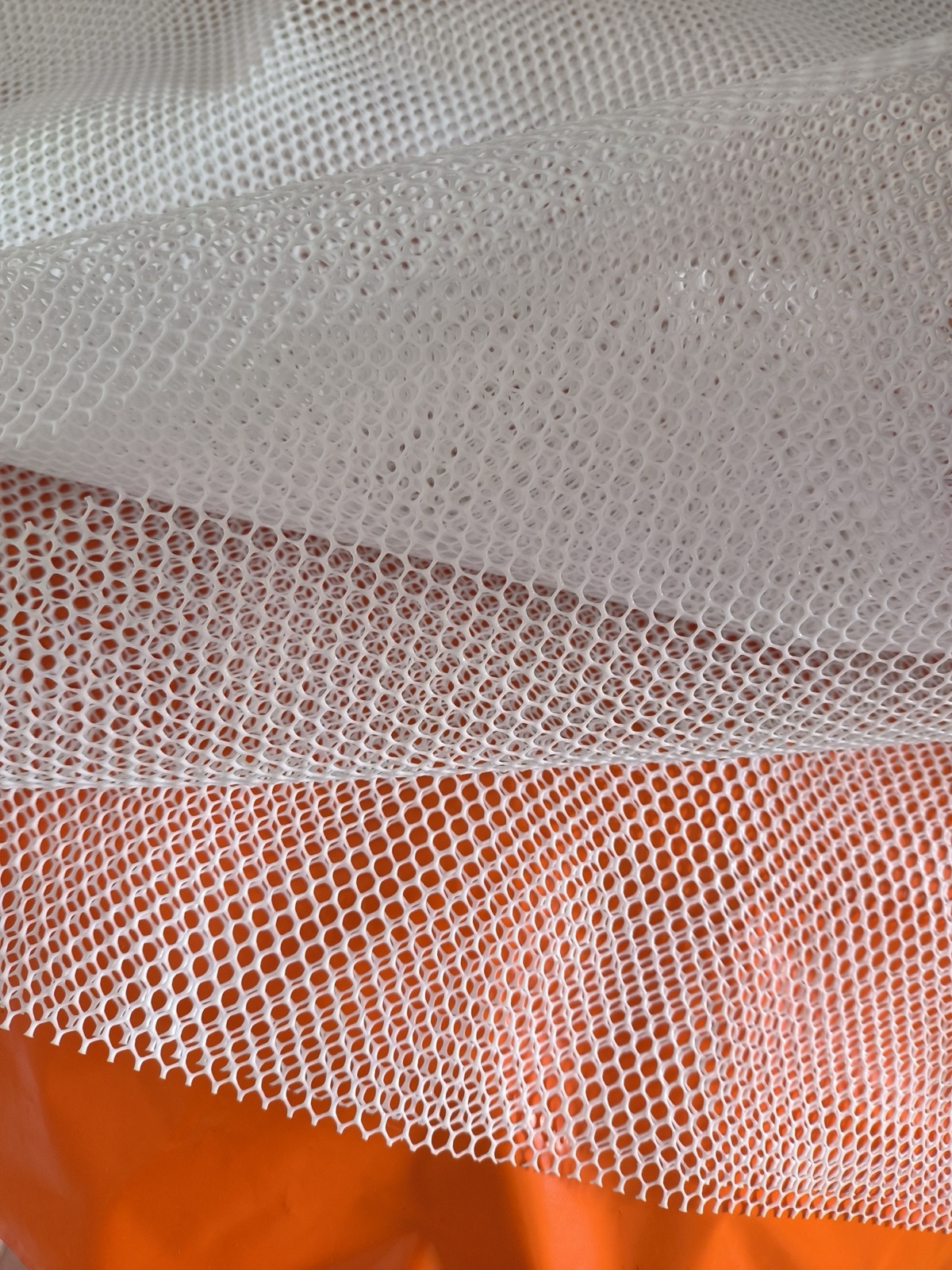
Perforated silicone steam mats are already a traded B2B category. Accio, aggregating Alibaba supplier listings, shows example prices of US$0.90-1.19 per piece at a minimum order of 100 pieces. That is a marketplace price for a comparable perforated liner, and it buys a reusable mat rather than a leaf or a paper square that is binned after one service. PuraDry quotes its own prices against your specification, machine washable, non-stick and heat resistant, with a perforated surface that lets steam through instead of blocking the basket.
The cost structure behind that band is short: material, perforation tooling and thickness. PuraDry manufactures in Shenzhen in 100 percent food-grade silicone, BPA-free, at 0.7 mm thick, in three hole patterns — 0.5 mm, 1 × 1 mm and 4 × 4 mm. Standard sizes are 60 × 80, 70 × 90 and 80 × 90 cm, with custom cuts to 2 m wide and 100 m long rolls. Minimum orders start at 20 mats and a 1,000-mat order ships in 3-5 days; samples and the food-contact report come together.
Hole pattern decides which product sits on which mat, and it is the specification kitchens most often get wrong first. The 0.5 mm pattern suits small pieces — har gow, soup dumplings, siew mai — where a wider opening would let the filling drop through. The 1 × 1 mm pattern is the general choice for baozi and most dim sum. The 4 × 4 mm pattern serves loads needing a strong flow of steam, such as large buns and thicker doughs.
How to Run the Comparison on Your Own Numbers
The comparison takes four steps. First, measure usage per shift: how many baskets are lined, how many leaves, paper squares or cupcake liners each basket consumes, and how much oil each service uses. Second, count shifts per day and operating days per year. Third, multiply — usage per shift × shifts per day × operating days per year = annual consumable volume. Fourth, the step most kitchens skip, divide annual spend by baskets produced, so both options are compared on the same unit of output.
Here is the arithmetic with published numbers, offered as an example only. A kitchen lining 40 baskets per shift across two shifts and 300 days a year lines 24,000 baskets annually. A mat at the top of the Accio band costs US$1.19 and serves every basket placed on it while it stays in service — so its cost per use is that price divided by the cycles one mat completes, and the weekly trial supplies that cycle count: US$1.19 divided by your measured cycles, not by one basket. Run the same division on last year's leaf, paper and oil invoices, and the lower per-use figure wins.
Two variables move that figure. The first is service life: wash chemistry, stacking and handling decide how many cycles a mat survives, which is why a week-long trial is the only reliable measurement. The second is labor: every paper square removed is a placement and a cleanup that no longer happens on paid time, and at chain volumes the labor that stops being spent compounds the same way the material does the same way the material does.
Frequently Asked Questions
Can a mat that costs more per piece still be cheaper?
It can, and that is the whole argument: compare cost per use, not cost per piece. A mat priced above a single paper liner is still cheaper if it covers hundreds of service cycles, because the paper liner must be bought again tomorrow and the mat does not. Divide both annual spends by the same basket count and the comparison holds.
What does a trial look like before we commit to volume?
Small and fast. PuraDry's MOQ is 20 mats and samples are free: match a standard size — 60 × 80, 70 × 90 or 80 × 90 cm at 0.7 mm — to your baskets, request the FDA 21 CFR 177.2600 report with the samples, and run one line on one hole pattern for a full week. That trial produces the service-life figure the spreadsheet needs.
Which hole pattern should a dumpling kitchen start with?
1 × 1 mm is the right default for a mixed menu, covering baozi, dumplings and most dim sum. Add the 0.5 mm pattern for small, delicate pieces, and 4 × 4 mm where a heavier steam flow is needed. Order samples of all three and test them on the products that stick most, then standardize around the winner.
What This Means for Buyers
The bamboo-and-leaf routine is not expensive because any single item costs much. It is expensive because every line on it has to be re-ordered for as long as the kitchen cooks. A perforated silicone steam mat turns a rolling purchase into a fixed one, and the comparison is settled by arithmetic a kitchen can run with its own invoices against a published price band — US$0.90-1.19 per piece at a minimum of 100 pieces, per Accio's aggregation of Alibaba supplier listings.
Send your basket sizes, shift pattern and the product families that stick most through the contact page, and PuraDry will ship free samples with the FDA 21 CFR 177.2600 report. With an MOQ of 20 mats and 3-5 day delivery on 1,000 mats, the trial is short — and the per-use number it produces lasts for years.