Care & How-To
How to Steam Baozi and Dumplings Without Sticking: A Kitchen Guide
Why steamed buns stick to the liner, how a perforated silicone mat fixes torn bottoms, which hole pattern fits which bun, and how to steam, clean and trial it.
The Short Version
Steam baozi and dumplings on a perforated silicone mat, leave a 2 to 3 cm gap between pieces, and rest the basket for 1 to 2 minutes off the heat before you lift the lid. Steam reaching the base of each piece through the holes is what stops the sticking.
This guide covers sticking the way a working kitchen meets it: what the traditional fixes do well, where they struggle during service, and how a perforated mat changes the routine from loading to lifting. PuraDry makes these mats in Shenzhen in three hole patterns.
Why Buns Stick, and What Traditional Kitchens Do About It
It is six in the morning in a dim sum kitchen and the first basket comes off the burner. The lid opens, the aroma is right, and the first bun lifts with its base left behind on the liner. Sticking is the most common way a steamed batch fails, and it happens at one place: the surface the dough sits on.
Before silicone, kitchens made do. wikiHow's steamer guidance suggests lining a bamboo steamer with lettuce or cabbage leaves, or moving to steamer paper when fresh leaves are not practical. Vicky Pham's Vietnamese cooking notes brush the steamer base with oil or lay down wax paper pieces for delicate dumplings such as har gow, rest bánh bao dough on 2 × 2 inch baking paper squares, and wrap other steamed items in banana leaves. A cloth liner for rice-roll sheets needs a practiced hand to peel each skin without tearing.
Each method works, and each asks something of the kitchen: leaves wilt and cling to the dough, paper squares are cut one at a time and soak through, oil has to be reapplied between rounds, and cloth demands a skill that does not transfer to a new hire. The cost lands when orders are already coming in. What a kitchen wants is a surface that releases the same way on the hundredth batch as on the first.
How to Steam With a Perforated Silicone Mat
The workflow is short. Lay the mat flat inside the steamer basket so the edges rest within the rim; standard sizes follow common baskets, and a sheet can be cut to fit an unusual one. Leave a finger's width between pieces so they do not touch and tear, because buns that touch tear when separated. Bring the water to a rolling boil before you load.
Steam at normal pressure sits at 212 °F (100 °C). Timing follows the size of the piece: small dumplings typically take 6 to 10 minutes, baozi 10 to 15 minutes, with larger filled buns at the top of that range. When the timer ends, switch off the heat and let the basket stand off the heat long enough for the pieces to firm before the lid comes off, which lets the pieces firm and reduces collapse. Lift each piece straight up; the base comes with it.
The reason is the openings. Perforation gives rising steam a path to the underside of the dough, so heat reaches the base as well as the crown, and the bottom sets at roughly the same rate as the rest of the piece. Condensation drains through the holes instead of collecting under the food, which is what leaves the pale, sticky ring that glues a bun down. On the mat, only a thin layer of non-stick silicone touches the dough.
Which Hole Pattern Fits Your Product
0.5 mm extra-fine suits small and delicate work: soup dumpling skins, miniature shumai, pieces under roughly 4 cm across, where a wider opening leaves the skin unsupported and it sags into the hole, and fillings with loose grains. The dense pattern spreads steam contact into many fine points, so support is high and the surface stays calm.
1 × 1 mm standard is the all-rounder and the pattern to order first for a mixed menu. Baozi, dumplings, jiaozi and most dim sum sit comfortably on the grid, steam moves freely underneath, and condensation drains at a steady rate, so the pattern suits everyday loading.
4 × 4 mm large holes belong to high-volume and high-moisture work: stacked baskets where steam flow limits throughput, tall items that need heat driven through, and wet products such as lotus-leaf rice. The open grid drains fastest, so keep it for pieces too large to pass through.
Cleaning, Storage, and What PuraDry Supplies
Wash the mat between services in warm water with a mild food-safe detergent and a soft sponge. A small brush clears the holes on the 0.5 mm pattern, where starch can lodge. The mats are dishwasher-safe on a normal cycle, and dry fully before stacking or rolling for storage, because silicone stored damp tends to hold odors.
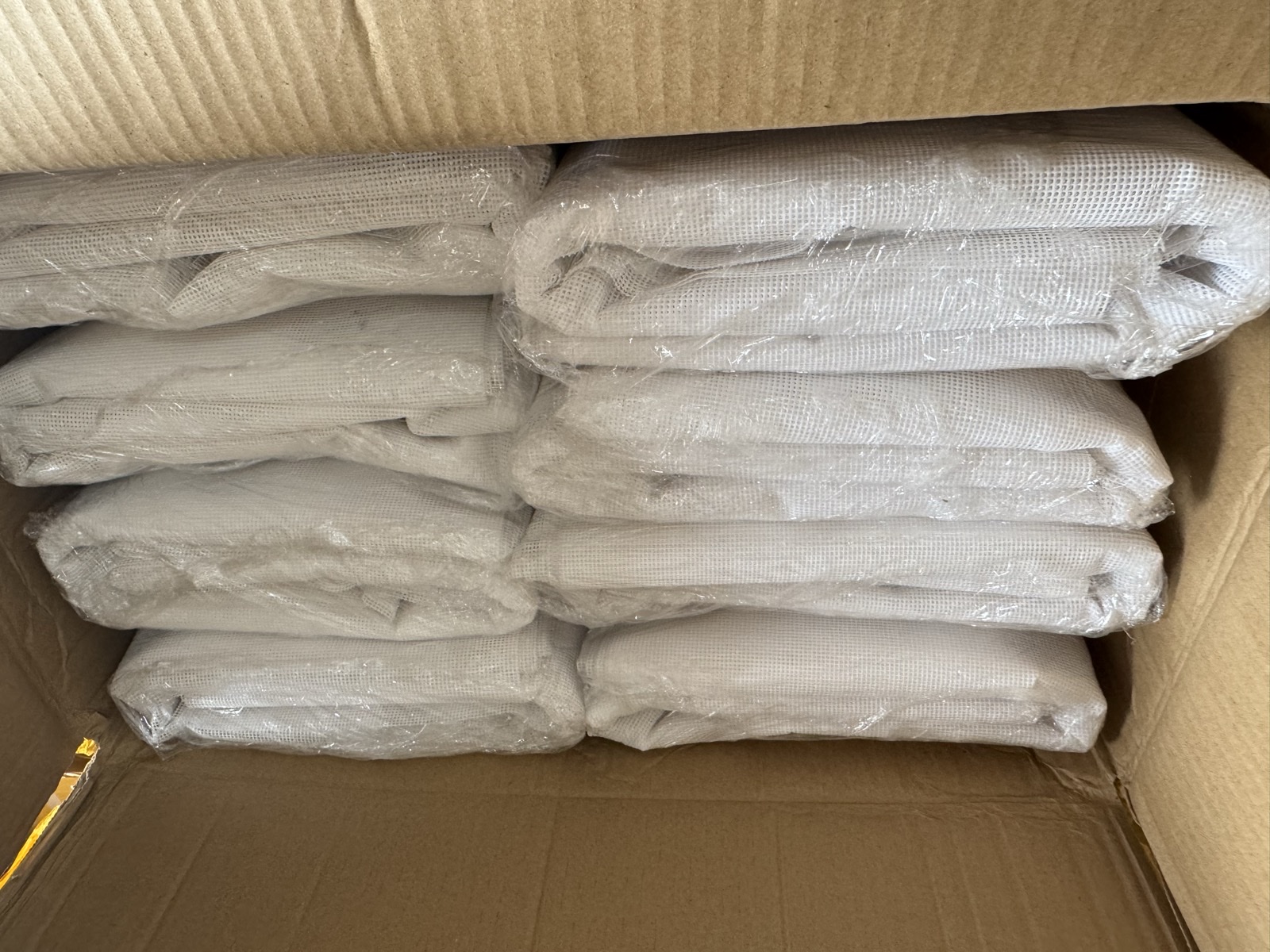
PuraDry is a silicone factory in Shenzhen, and our steam mat range is perforated throughout: 1 × 1 mm standard, 0.5 mm extra-fine and 4 × 4 mm large holes at 0.7 mm thick, 100 percent food-grade silicone that is BPA-free. Standard sizes are 60 × 80, 70 × 90 and 80 × 90 cm, with custom widths up to 2 m and rolls up to 100 m. The working range is -40 to 356 °F (-40 to 180 °C). An FDA 21 CFR 177.2600 report is available on request, the MOQ is 20 pieces, 1,000 pieces run in 3 to 5 days, and free samples are available.
Frequently Asked Questions
Do I still need oil or paper with a silicone mat?
No. That is the mat's job: nothing has to be brushed on between rounds and no squares have to be cut or replaced. If your kitchen oils the basket today, run the first batch on a clean, dry mat and compare where the release happens.
Why does the base of my buns come out pale and sticky?
Usually because moisture is trapped under the dough. With a perforated mat, steam passes through the holes, so the base of each bun cooks instead of sitting in condensation. If the pale ring still appears, check the spacing between pieces and whether the water level kept steam flowing for the whole cycle.
How should mats be stored between services?
Wash, rinse and dry them fully, then stack flat or roll them loosely. Keep the mats used for steamed products separate from other kitchen uses, and check the edges periodically for cuts.
What This Means for Buyers
Sticking is a surface problem, so the fix is a surface decision: a perforated silicone mat sized to your steamer, a hole pattern matched to your smallest and wettest products, and a short rest before the lid comes off. For a mixed dim sum menu, order the 1 × 1 mm pattern first and add 0.5 mm or 4 × 4 mm as specific products ask. PuraDry covers 60 × 80, 70 × 90 and 80 × 90 cm baskets, free samples are available, and the FDA 21 CFR 177.2600 report can travel with them. Request both through the contact page, steam a batch on your own burner, and compare the bases.